Turn Mediterranean Botanical Aroma into a Premium Single-Cup Tea Experience
Greek-style tea products often bring to mind Mediterranean botanical aromas, mountain herbs, flowers, and fresh fruit-inspired blends. For tea brands, herbal tea can create a natural product identity through visible botanical ingredients, while black tea can provide a clearer infusion structure and a full-bodied tea base.
In this article, “Greece herbal tea and black tea” refers to products developed, blended, packed, or sold for the Greek market or a Greek-style brand position. Black tea leaves and some botanical ingredients may come from different supply regions. Brands should build trust through complete ingredient lists, accurate raw-material information, and real brewing performance rather than treating “Greek style” as a claim about every ingredient’s origin.
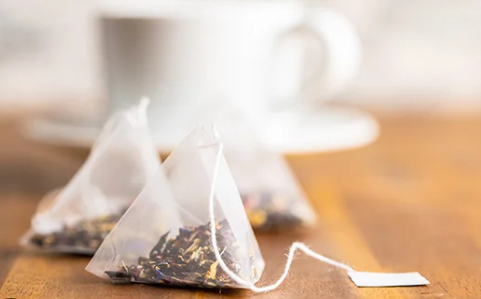
A pyramid tea bag gives whole leaves, flowers, petals, cut botanicals, and fruit pieces more three-dimensional space. Consumers can see the ingredients after opening the pack and observe them expanding in hot water. This visible-blend format is suitable for specialty retail, travel souvenirs, hotel tea service, gift boxes, and e-commerce trial products.
Define the Aroma Direction Before Setting the Tea-and-Herb Ratio
A Greek herbal tea and black tea project should create differentiation through a clear aroma direction, not simply through Mediterranean-style package artwork. Brands may develop ranges such as:
- Mountain Botanical Tea: suitable drinkable botanicals with natural, herbal, or gentle floral character;
- Floral Blend Tea: flowers, petals, and botanical ingredients for visual and aromatic layers;
- Black Tea with Botanicals: black tea as the infusion foundation with carefully balanced botanical notes;
- Citrus and Fruit Blends: peel, fruit pieces, and petals for brighter aromatic character;
- Travel and Gift Collections: individually wrapped, multi-flavor products for hotels, retail, and gifting.
The key to formulation is balance rather than ingredient count. Strong botanicals can hide black tea character, while too many fine particles may reduce infusion clarity. Every tea should be tested at the intended water temperature, water volume, and steeping time.
Pyramid Tea Bags Give Ingredients Space, but Require Tighter Ingredient Control
Herbal and black tea ingredients differ significantly in form. Whole black tea leaves are light, flowers are fragile, fruit pieces can be heavier, and cut botanicals may vary in length and density. Pyramid bags provide greater capacity, but they do not automatically solve ingredient separation, fill-weight variation, or feeding problems.
Before production, brands should confirm:
- Whether ingredients are properly screened to a suitable particle-size range;
- Whether mixed ingredients remain uniform during storage and conveying;
- Whether petals, flowers, or fruit pieces become excessively damaged during mechanical feeding;
- Whether fill weight is sufficient for the intended cup strength;
- Whether bag size leaves space for ingredients to expand after hydration;
- Whether the filter material supports steady water flow while limiting fine particles in the cup.
Different tea-bag sizes, fill weights, and feeding parameters may be needed for black tea, herbal tea, and fruit-and-flower blends.
How a Pyramid Tea Bag Packing Machine Delivers Consistent Ingredient Presentation
A pyramid tea bag packing machine can integrate automatic dosing, 3D bag forming, sealing, string-and-tag application, and individual outer-envelope packing into a continuous workflow. For Greek-style tea products that emphasize ingredient appearance, machine stability directly affects visual quality and brewing consistency.
Depending on configuration, the equipment can support:
- Automatic measured filling of black tea, herbal tea, or fruit-and-flower blends;
- Pyramid tea bag forming with suitable filter material;
- Ultrasonic or heat sealing of each tea bag;
- String-and-tag attachment, or tagless tea bag production;
- Individual outer-envelope sealing;
- Connection with cartons, gift boxes, tins, or multipack processes.
Formulas that contain whole flowers, larger fruit pieces, or irregular botanicals should be trialed with real ingredients to confirm feeding stability, bag fullness, and seal quality.
Individual Envelopes Make Mediterranean Aroma More Suitable for Retail Distribution
Herbs and black tea can be affected by humidity, oxygen, light, and surrounding odors during storage. The pyramid bag serves the brewing process, while the individual outer envelope helps protect the product throughout its journey from factory to consumer.
Appropriate barrier materials, stable heat sealing, and sensible gift-box structures can improve protection during storage, transport, and shelf display. For multi-flavor collections, individual envelopes can also reduce the chance of aroma transfer between tea bags.
Shelf-life, aroma-retention, and storage claims should be based on actual ingredients, packaging structures, sealing parameters, transport conditions, and finished-product testing. A pyramid tea bag or individual envelope does not automatically guarantee a fixed product life.
Packaging Information Should Be as Clear as Brewing Instructions
High-quality Greek herbal tea and black tea packaging can combine brand storytelling with useful product information. Consider stating:
- A complete ingredient list, including black tea, herbs, and fruit pieces;
- Whether black tea is included, with appropriate caffeine information;
- Aroma and flavor description;
- Recommended water temperature, steeping time, and water volume per bag;
- Fill weight, tea-bag count, batch information, and storage conditions;
- Required language and food-label content for each target market.
Use sensory terms such as floral, botanical, fruity, fresh, or gentle for herbal tea. Avoid unverified health, therapeutic, or functional claims.
Validate Whether the Tea Bag Is Truly Market-Ready—from Machine Trial to Brewing
Before selecting a pyramid tea bag packing machine, conduct complete trials using the actual black tea, botanicals, fruit pieces, filter material, strings, tags, and outer-envelope film intended for commercial sale. Key checks include:
- Stable ingredient feeding and accurate dosing;
- Whether mixed ingredients separate, bridge, or break visibly;
- Whether pyramid bags are three-dimensional, full, and securely sealed;
- Whether tags, strings, and envelopes are neat and reliable;
- Whether pack appearance and aroma remain stable after transport and storage;
- Whether infusion, aroma, and taste match the intended brand position when brewed according to instructions.
Xiamen Sengong Packing Equipment Co.,Ltd provides equipment solutions for tea, herbal tea, and food packaging projects. For Greece herbal tea, black tea, fruit-and-flower blends, and pyramid tea bag projects, visit Quicker Pack and VIPacker to explore relevant equipment and evaluate it using your actual ingredients, packaging materials, and capacity targets.
Conclusion
The appeal of Greece herbal tea and black tea pyramid tea bags lies in combining Mediterranean-style aroma, visible ingredients, and convenient brewing into one complete single-cup experience. By defining the aroma direction first, then validating ingredient ratios, tea-bag dimensions, and individual-sealing solutions, brands can use a reliable pyramid tea bag packing machine to develop premium tea products for specialty retail, hotels, gifting, e-commerce, and everyday drinking.