Build an Egyptian-Style Tea Range Through Color, Aroma, and Infusion
Tea products for the Egyptian market can include full-bodied black tea, herbal tea, fruit tea, and blends with distinctive botanical ingredients. Black tea can create a familiar, robust infusion, while herbs, flowers, peel, and fruit pieces add visible ingredient form and aromatic layers.
For example, hibiscus is often used in herbal and fruit tea blends, where its distinctive color and tart aromatic character can create strong visual identity. Products of this type should be developed around real ingredients, real formulas, and actual brewing performance—not exaggerated health or functional claims.
In this article, “Egypt herbal tea and black tea” refers to tea products developed, blended, packed, or sold for the Egyptian market. Black tea, botanical ingredients, and fruit materials may come from different supply regions. Clear ingredient, formulation, and brewing information is more valuable for long-term trust than vague origin marketing.
Start with the Cup, Then Design the Formula
Many tea projects begin with package appearance and decide on the formula later. A premium pyramid tea bag works better in reverse: first define what consumers should see, smell, and taste, then match the ingredients and bag structure to that experience.
Egyptian herbal tea and black tea ranges can be developed around:
- Infusion color: amber tones from black tea and natural color from botanicals or fruit;
- Aromatic layers: tea aroma, floral notes, and fruit character from peel or fruit pieces;
- Cup structure: black tea provides body, while botanical and fruit ingredients add freshness and flavor variation;
- Brewing convenience: consistent performance at a clearly stated water temperature and steeping time;
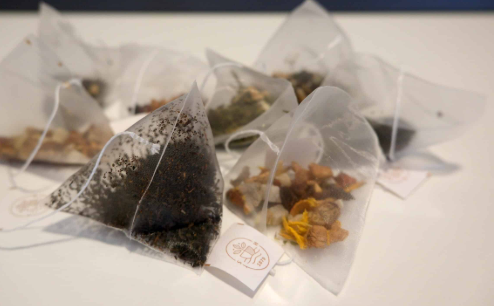
- Retail visibility: consumers can see tea leaves, petals, and fruit pieces through the pyramid bag.
Possible product formats include classic black tea, hibiscus blends, black tea with fruit and flowers, hotel tea bags, office assortments, and festive gift boxes. Each formula should be validated through brewing tests to avoid ingredient conflict, cloudy infusions, or unbalanced aroma.
Pyramid Tea Bags Suit Varied Ingredient Shapes—But Blending Must Be Controlled
The three-dimensional volume of a pyramid tea bag suits whole black tea leaves, larger petals, cut botanicals, fruit pieces, and peel. These ingredients have more space to hydrate and expand in hot water, improving both brewing behavior and the opening experience.
However, visually rich blends present a practical challenge: ingredients may differ greatly in density, size, and flowability. Light petals, heavier fruit pieces, and tea leaves of varying shape can separate during transport, mixing, and automated feeding. If they do not enter every bag evenly, the formula will vary from one tea bag to another.
Before packing, confirm:
- Whether ingredients have been screened to a suitable particle-size range;
- Whether the blend remains uniform after mixing;
- Whether feeding creates bridging, blockage, or excessive fine-particle dust;
- Whether fill weight matches the intended cup volume;
- Whether pyramid bag size accommodates hydrated ingredient expansion;
- Whether the filter material balances water flow with fine-particle filtration.
How a Pyramid Tea Bag Packing Machine Creates Standardization and Refined Appearance
A pyramid tea bag packing machine can connect ingredient dosing, 3D bag forming, sealing, string-and-tag application, and individual outer-envelope packing in one continuous process. For Egyptian herbal tea and black tea projects, the goal of automation is to help each bag maintain consistent weight, ingredient ratio, appearance, and seal quality.
A typical process may include:
- Automatic measured filling of black tea, herbal tea, or fruit-and-flower blends;
- Forming 3D pyramid tea bags with suitable food-contact filter materials;
- Ultrasonic or heat sealing of each bag;
- String-and-tag attachment, or tagless tea bag production;
- Individual outer-envelope sealing;
- Transfer to cartons, gift boxes, hospitality kits, or multipacks.
For hibiscus, flower petals, fruit pieces, and fragile botanicals, real trials can identify suitable dosing methods, feeding speeds, and bag dimensions to reduce breakage and maintain a consistent finished appearance.
Individual Sealing Supports Storage, Distribution, and Gifting
Herbal tea and black tea can be affected by humidity, oxygen, light, and surrounding odors during storage. The pyramid tea bag provides room for infusion, while an individual outer envelope gives the product additional protection and supports hygiene, portability, and gift-box presentation.
For blends with floral, fruity, or spice aromas, individual sealing can reduce the opportunity for flavors to transfer between different products. Projects involving high temperatures, long storage, or long-distance delivery should test envelope materials and seal quality under realistic distribution conditions.
A specific shelf-life or aroma-retention claim should not be made simply because individual envelopes are used. Shelf life, storage guidance, and product statements should be based on real ingredients, packaging structures, sealing parameters, logistics conditions, and finished-product test results.
Packaging Information Must Balance Style with Accuracy
Egyptian-style tea bags can use colorful, culturally inspired design, but label content should remain clear and verifiable. Consider including:
- A complete ingredient list identifying black tea, herbs, fruit pieces, and spices;
- Whether black tea is present, with appropriate caffeine information;
- Recommended water temperature, steeping time, and water volume per tea bag;
- Fill weight, tea-bag count, and storage instructions;
- Batch, production date, or traceability information;
- Arabic, English, and other required compliance content for Egypt and export markets.
For herbal tea, use objective sensory language such as floral, fruity, tart, fresh, or gentle. Avoid unverified health, therapeutic, or functional claims.
Equipment Trials Should Validate the Final Cup
Before purchasing a pyramid tea bag packing machine, conduct trials with the real commercial formula. Do not only observe machine speed; let the product complete the full journey from production through storage and transport to brewing:
- Do ingredients feed steadily and reach target weight?
- Do black tea, petals, and fruit pieces separate or become significantly damaged?
- Are pyramid tea bags intact, full, and securely sealed?
- Are strings, tags, and outer envelopes neat and dependable?
- Do multiple aromatic products transfer odors inside a gift box?
- After distribution conditions, do infusion color, aroma, and taste still meet the intended product position?
Xiamen Sengong Packing Equipment Co.,Ltd provides equipment solutions for tea, herbal tea, and food packaging projects. For Egypt black tea, herbal tea, hibiscus blends, fruit tea, and pyramid tea bag projects, visit Quicker Pack and VIPacker to explore relevant equipment and evaluate it against your actual ingredients, packaging materials, and capacity targets.
Conclusion
The appeal of Egypt herbal tea and black tea pyramid tea bags lies in combining infusion color, ingredient form, aromatic layers, and convenient brewing in one tea bag. By developing formulas around the real drinking experience, controlling blending and dosing consistency, and using a reliable pyramid tea bag packing machine for bag forming and individual sealing, brands can create distinctive tea products for retail, hospitality, gifting, e-commerce, and everyday consumption.