Argentine Tea Culture Is Built Around More Than One Ingredient
Yerba mate is one of the most recognizable botanical beverages associated with Argentina. It comes from the leaves of the yerba mate plant and is not the same ingredient as black tea, which is produced from the tea plant. Black tea may offer malty, fruity, caramel-like, or full-bodied notes, while yerba mate commonly has botanical, grassy, and roasted characteristics. Flowers and fruit ingredients can add color and aromatic layers.
An Argentine-style product range may therefore include:
- Yerba mate as the main botanical ingredient;
- Everyday black tea;
- Yerba mate blended with herbs, peel, fruit, or spices;
- Black tea with flowers and fruit;
- Herbal blends without black tea.
In this article, “Argentina herbal tea and black tea” refers to products developed, blended, packed, or sold for the Argentine market. It does not mean that every tea leaf, flower, or fruit ingredient originates in Argentina. Brands should describe origins and formulas according to the actual supply chain.
Turn a Traditional Shared Drink into a Convenient Single Cup
Yerba mate is traditionally enjoyed with a dedicated vessel and a filtered straw, often with repeated additions of water and a social element. A pyramid tea bag does not replace this traditional practice. It provides a convenient alternative for offices, hotels, travel, and retail.
Consumers can place the bag in a cup and add hot water to prepare a single serving without specialized equipment. This lowers the entry barrier for people trying yerba mate for the first time and gives experienced consumers a more portable option.
Packaging should clearly distinguish among yerba mate, black tea, and herbal infusions that do not contain tea leaves. Different ingredients should not be grouped under a vague label that may confuse consumers.
Build Four Layers into a Pyramid Tea Bag Formula
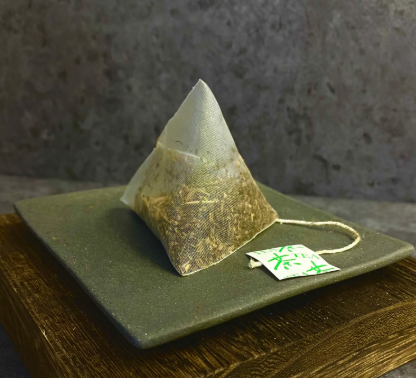
Unlike a standard fine-cut tea bag, a pyramid bag can display larger leaves, petals, peel, and cut botanicals. An Argentine-style blend can be developed through four layers:
- Base ingredient: black tea or yerba mate defines the main infusion;
- Aromatic ingredient: herbs, peel, fruit, or spices create the leading aroma;
- Visual ingredient: selected petals and fruit pieces improve ingredient visibility;
- Brewing parameters: fill weight, water temperature, and steeping time determine strength.
More ingredients do not automatically create a better product. Excessive large pieces can complicate dosing, too many fines can make the infusion cloudy, and strong flavoring ingredients can hide the character of black tea or yerba mate. Each formula should be confirmed through actual brewing rather than dry appearance alone.
Ingredient-Size Differences Are a Major Packaging Challenge
Yerba mate leaves and stems, black tea leaves, lightweight petals, peel, and heavier fruit pieces differ in density and flow behavior. During blending, conveying, and hopper storage, they can separate and produce inconsistent ratios between tea bags.
Before packing, validate:
- Whether particle sizes suit automatic dosing;
- Whether leaves, stems, and long botanicals cause bridging;
- Whether blended ingredients remain uniform;
- Whether feeding creates excessive breakage or dust;
- Whether fill weight matches the intended cup volume;
- Whether the tea bag leaves enough room for hydrated expansion;
- Whether the filter material supports water flow while retaining fines.
Screening, optimized cutting specifications, or a different dosing method may be needed to improve consistency.
Production Process of a Pyramid Tea Bag Packing Machine
A pyramid tea bag packing machine can integrate ingredient dosing, 3D bag forming, sealing, string-and-tag application, and individual outer-envelope packing. Depending on the configuration, it may support:
- Automatic dosing of black tea, yerba mate, or herbal blends;
- Pyramid tea bag forming with suitable filter material;
- Ultrasonic or heat sealing;
- String-and-tag application, or tagless bag production;
- Individual outer-envelope sealing;
- Connection with cartons, gift boxes, multi-flavor assortments, or hotel packs.
Brands producing yerba mate, black tea, and herbal tea on the same line should evaluate changeover convenience, cleaning requirements, residue control, and dosing compatibility with each ingredient.
Individual Envelopes Support Flavor Protection and Multiple Sales Channels
Black tea, yerba mate, and botanicals can be affected by humidity, oxygen, light, and surrounding odors. Individual outer envelopes add protection and make pyramid tea bags better suited to hotels, e-commerce, gift boxes, and travel retail.
Multi-flavor sets particularly benefit from individual sealing because it can reduce aroma transfer among floral, fruit, and spice blends. Barrier performance, sealing parameters, and transport durability should be tested according to the real product and sales channel.
Shelf life, storage guidance, and aroma-retention claims must be based on actual ingredients, packaging materials, seal settings, distribution conditions, and finished-product tests. They cannot be guaranteed by package format alone.
Accurate Labels Are More Valuable Than Exaggerated Claims
Argentine tea packaging should clearly provide:
- A complete list of yerba mate, black tea, herbs, peel, fruit pieces, and spices;
- Whether the product contains black tea or yerba mate, with appropriate caffeine information;
- Recommended water temperature, volume, and steeping time;
- Fill weight, tea-bag count, and storage instructions;
- Ingredient origins, batch details, or traceability information;
- Required language and food-label content for the target market.
Yerba mate and herbal blends can be described as botanical, roasted, floral, fruity, fresh, or full-bodied. Avoid unverified medical, weight-loss, or wellness claims.
Complete Machine Trials with the Actual Formula
Before choosing equipment, conduct trials using the ingredients, filter material, strings, tags, and outer-envelope film intended for commercial sale. Check:
- Stable ingredient feeding and accurate dosing;
- Whether yerba mate leaves and stems, petals, or fruit pieces separate;
- Whether pyramid bags are full, intact, and securely sealed;
- Whether strings, tags, and envelopes are neat and dependable;
- Whether ingredient residue remains after product changeover;
- Whether finished packs stay sealed after transport and storage;
- Whether aroma, strength, and infusion quality match the intended position.
Xiamen Sengong Packing Equipment Co.,Ltd provides equipment solutions for tea, herbal tea, and food packaging projects. For Argentina black tea, yerba mate, herbal tea, and pyramid tea bag projects, visit Quicker Pack and VIPacker to explore relevant equipment and conduct trials with your actual formula, packaging materials, and target fill weight.
Conclusion
The differentiation opportunity for Argentina herbal tea and black tea pyramid bags lies in combining yerba mate culture, premium blending, and modern single-cup convenience. By accurately distinguishing ingredients, controlling blend uniformity, selecting a suitable 3D filter bag, and providing dependable individual sealing, a reliable pyramid tea bag packing machine can help brands develop quality beverages for retail, hotels, e-commerce, gifting, and travel.