Gabon Coffee: Turning an Origin Story into a Verified Cup with Ultrasonic Drip Bag Packaging
Gabon Coffee Deserves Attention Without Exaggerated Flavor Claims
For coffee brands seeking differentiation, Gabon offers an origin worth exploring. The International Coffee Organization lists a project focused on developing the potential of gourmet Robusta in Gabon and Togo. This provides context for quality development, but a historical project does not establish that every available lot meets specialty standards.
The first step in developing a Gabon coffee product should therefore be securing traceable material and evaluating it through roasting and tasting—not assigning labels such as “rare,” “top-grade,” or predetermined flavor notes.
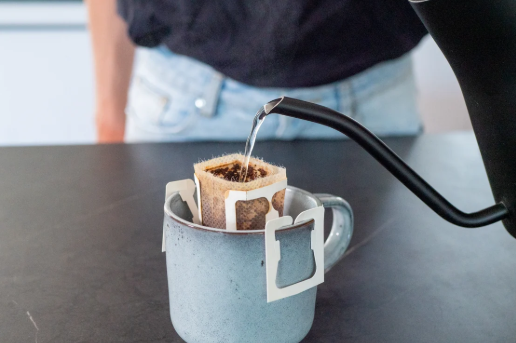
A drip coffee bag, also known as a hanging-ear coffee bag, allows consumers to explore an unfamiliar origin without a coffee machine or grinder. It lowers the barrier to trying the product, while quality still depends on the relationship between sourcing, roasting, grinding, and packaging.
Define What “Gabon Coffee” Means
An origin-led product name should match the actual formula:
Coffee grown in Gabon: The origin should be supported by sourcing and lot records.
A blend containing Gabon coffee: If beans from other countries are included, the product should identify itself as a blend rather than imply an entirely Gabonese origin.
Coffee developed for the Gabon market: Selling or packing a product in Gabon does not automatically mean its beans were grown there.
Making these distinctions helps brands create credible packaging and product pages that match procurement records.
Validate Demand with Trial Packs Before Finalizing Production
Single-cup samples can be a practical starting point for an origin consumers may not know. Brands can distribute a small pilot batch and collect feedback on aroma, strength, finish, and brewing convenience.
Trials do not need to change every variable at once. Two validated roast approaches can be compared using the same filter and preparation method. Once the flavor direction is established, the brand can finalize fill weight, retail format, and assortment structure.
This process answers a useful question: do consumers choose the product to discover Gabon coffee, because they enjoy it as an everyday drink, or both? Each reason benefits from real feedback.
Redesign the Grind for Drip Brewing
Drip coffee relies on gravity to move water through the coffee bed and filter. Grounds intended for espresso or pot brewing may not work directly in a hanging-ear bag.
An excessively fine grind may slow drainage, create pooling, and produce uneven extraction. A coarse grind may deliver insufficient strength. Brands should validate:
- Particle distribution and fine-particle content;
- Fill weight;
- Filter permeability;
- Bag capacity and expansion after wetting;
- Water temperature, total volume, and pouring rhythm;
- Actual drainage time and cup performance.
Even within Robusta coffee, different lots, processing conditions, and roast profiles may behave differently. Species alone is not enough to establish machine or brewing parameters.
Ultrasonic Sealing Creates a Dependable Inner Filter
Ultrasonic technology in a drip coffee bag packing machine is typically used to bond compatible inner filter materials. High-frequency mechanical vibration produces a localized effect at the joint, allowing suitable materials to connect.
This is not ultrasonic coffee extraction, it is not entirely heat-free, and it does not mean every filter paper works with the same settings.
Depending on configuration, a line may integrate dosing, filter forming and ultrasonic sealing, hanging-ear handling, individual envelopes, and batch coding. The inner filter retains grounds and supports brewing. The outer envelope protects the product before opening. These functions require separate validation.
For example, the VIPacker C19H ultrasonic drip coffee inner and outer bag packing machine describes inner-and-outer packaging, outer-envelope temperature control, and optional date-printing and easy-tear devices. Suitability should be confirmed through the selected configuration and actual material trials.
Evaluate Both the Dry Pack and the Wet Filter
A neat-looking coffee bag may not perform reliably during brewing. Equipment acceptance should therefore include two stages.
Dry inspection: Check fill weight, trapped grounds, leakage, seal edges, hanging-ear position, and filter condition after transport.
Brewing inspection: Use the intended cup and pouring method to assess support stability, filter integrity, drainage, and the effect of wet coffee weight on the structure.
Frequent grounds in the sealing area should trigger checks of filling timing, landing position, fines, and product-channel condition—not just higher ultrasonic power. A clean sealing area is essential to a dependable bond.
Aroma Protection Requires Good Production Organization
The delay between grinding and packing, residence time in the hopper, and post-roast degassing can affect the finished product. A high-barrier envelope cannot reverse quality changes that occurred before sealing.
Production batches can be organized around actual orders and machine capacity to limit unnecessary open-air holding. Outer-envelope material should match the product and distribution conditions, while seal integrity should be tested on finished packs.
If nitrogen flushing is used, evaluate residual oxygen and storage performance rather than simply confirming a gas connection. Shelf life should be established using the actual coffee, packaging materials, production settings, and expected logistics conditions.
Make Every Repeat Order Traceable to Its Lot
Repeat purchases depend on whether the next batch meets consumer expectations. Brands should retain sourcing, roasting, grinding, packing, and sample records, with appropriate revalidation when the raw-material lot changes.
The envelope or product page can provide:
- Verified bean origin and species;
- Single-origin or blend identification;
- Actual roast level and tasting notes;
- Fill weight and brewing instructions;
- Batch, packing, and storage information.
Nutty or cocoa-like tasting notes should be presented as sensory descriptions. If no nuts or cocoa are added, the packaging should not suggest otherwise.
Discuss the Actual Product, Not Only Target Speed
For Gabon-origin coffee, blends containing Gabon coffee, or single-cup trial products, contact Xiamen Sengong Packing Equipment Co., Ltd to discuss inner-and-outer packaging requirements. Related equipment can also be explored through VIPacker.
Provide the actual coffee, filter material, hanging-ear structure, envelope, and target fill weight, together with the intended cup volume and acceptance criteria. Speed, dosing range, material compatibility, and optional functions should be confirmed through the chosen configuration and trial results.
Conclusion
A Gabon drip coffee product should offer more than an unfamiliar origin name. Traceable sourcing, lot-specific tasting, drip-brewing development, and complete packaging validation can turn curiosity about an origin into a repeatable drinking experience. An ultrasonic drip coffee bag packing machine supports this process through consistent dosing, bag forming, and packaging—it does not replace coffee quality management.