South African Coffee: Bringing Roast Quality into Everyday Settings with Ultrasonic Drip Bag Packaging
Can Coffee Stay Consistent After It Leaves the Roastery?
Inside a roastery, coffee can be demonstrated with familiar grinders, brewers, and controlled recipes. In a hotel room, office, or travel setting, cups, kettles, and preparation methods change.
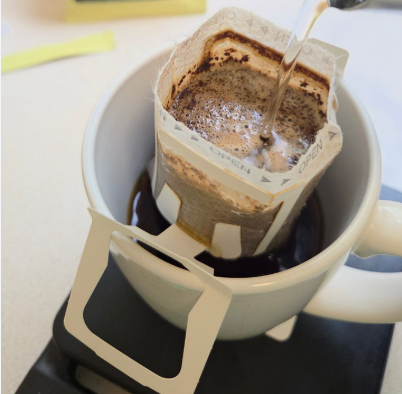
For South African coffee brands, a drip coffee bag offers a way to turn roasted coffee into an accessible, portable single-cup product. Consumers need no grinder or coffee machine: they attach the hanging-ear filter to a cup and add hot water in stages.
Convenience, however, should be more than a claim on the package. A retail-ready drip bag needs to deliver reasonable flow, consistent strength, and enjoyable aroma under ordinary consumer conditions.
Distinguish South African-Grown Coffee from South African-Roasted Coffee
“South African coffee” can describe several different sourcing relationships. Coffee is grown locally in South Africa; for example, Beaver Creek in KwaZulu-Natal describes its activities across growing, harvesting, roasting, and packing.
However, a South African roasting location or brand identity does not mean that every bean was grown domestically. Product information should explain:
- Whether the beans were grown in South Africa or elsewhere;
- Whether the product is single-origin or a multi-origin blend;
- Where roasting, grinding, and packing take place;
- Which actual lot supports the flavor description.
A brand using imported green coffee can communicate its local roasting expertise while accurately identifying bean origin. Clear sourcing creates more confidence than an ambiguous origin story.
Validate One Drip Coffee Product in Three Real Settings
Brands can use office, accommodation, and travel scenarios during development rather than evaluating finished packs only under controlled tasting conditions.
Office use: test ease of preparation.
Use an ordinary cup and everyday kettle. Can a first-time user unfold the supports, open the filter, and judge the water volume? If excellent results require specialist pouring skills, improve the product or instructions.
Hotel and accommodation use: test cup compatibility.
Check support stability, whether the filter outlet becomes submerged in brewed coffee, and whether the cup has sufficient capacity. An unsuitable cup can change the intended brewing method.
Travel use: test package durability.
Simulate compression in a bag and normal delivery handling. Check for envelope damage, grounds leakage, and deformed supports. Used grounds and packaging should also be easy to collect and carry out.
These tests can reveal problems that are not visible during a machine demonstration.
Define the Brew Before Selecting Grind and Fill Settings
Drip coffee relies on gravity to move water through the coffee bed. Grind settings developed for espresso or another brewer should not automatically be reused.
An excessively fine grind may restrict flow, create pooling, and increase uneven extraction. A coarse grind may produce insufficient strength. Adding more coffee is not always the answer, because an overfilled filter may lack space for wetting and expansion.
Validate the following together:
- Particle distribution and fine-particle content;
- Fill weight and target cup volume;
- Filter permeability and bag capacity;
- Pouring method, total water volume, and drainage time;
- Sweetness, acidity, and finish as the coffee cools.
Settings should come from the actual product—not simply from a roast label, coffee species, or country name.
Ultrasonic Filter Sealing and Outer-Envelope Sealing Have Different Roles
An ultrasonic drip coffee bag packing machine typically uses ultrasonic technology to bond compatible inner filter material. High-frequency mechanical vibration creates a localized effect at the joint, allowing suitable materials to connect.
This is neither a brewing process nor a direct freshness treatment. The inner filter primarily retains grounds and maintains its structure during use.
The outer envelope protects the product before opening. Its sealing method must suit its own material structure. Ultrasonic inner-filter sealing does not mean that the outer envelope requires no heat sealing.
Depending on configuration, equipment may integrate dosing, filter forming and sealing, hanging-ear handling, individual envelopes, and batch printing. The VIPacker C19H ultrasonic drip coffee inner and outer bag machine describes inner-and-outer packaging, outer-envelope temperature control, and optional date-printing and easy-tear devices. Functions and practical capacity should be verified through model selection and material trials.
Continuous Production Matters More Than One Attractive Sample
One successful bag does not demonstrate production stability. Equipment acceptance should include consecutive sampling for fill-weight distribution, seal condition, and brewing performance.
Check whether:
- Fine coffee particles enter the ultrasonic sealing area;
- Filter edges show damage or incomplete bonding;
- Hanging ears are symmetrical, secure, and easy to unfold;
- Grounds accumulate in product channels;
- Outer envelopes show trapped particles, wrinkles, or incomplete seals;
- Coffee from the previous batch remains after changeover.
Frequent trapped grounds should prompt investigation of filling timing, powder condition, and landing position—not simply higher ultrasonic power. Finished filters should also be brewed with hot water to confirm reliable performance after wetting.
Aroma Protection Includes the Waiting Time After Grinding
Ground coffee has a larger exposed surface area than whole beans. High-barrier envelopes can help limit outside influences, but they cannot reverse quality changes that occurred before packing.
Manage the interval between grinding and sealing, residence time in the hopper, post-roast degassing, and actual storage conditions.
If nitrogen flushing is selected, assess residual oxygen, seal integrity, and sensory performance after storage. Shelf life must be established using the real coffee, packaging materials, production settings, and expected distribution conditions. “Nitrogen packed” or “ultrasonic” alone is not a guarantee.
Product Pages Should Answer Practical Consumer Questions
Instead of relying on adjectives such as “premium” or “fresh,” South African drip coffee packaging and product pages can provide:
- Bean origin, blend details, and roasting location;
- Flavor descriptions based on the actual lot;
- Fill weight and recommended water volume;
- Instructions for unfolding, pouring, and removing the filter;
- Cup recommendations or necessary usage guidance;
- Batch details, storage instructions, and product-label information.
Cocoa or nut notes may describe the coffee’s sensory character. If those ingredients are not added, the packaging should not imply that the product contains cocoa powder or nuts.
Choose Equipment Around the Real Product
For South African-roasted coffee, locally grown coffee, hospitality products, or travel drip bags, contact Xiamen Sengong Packing Equipment Co., Ltd to discuss inner-and-outer packaging requirements. Relevant solutions can also be explored through VIPacker.
Provide the actual coffee, filter material, hanging-ear structure, envelope, and target fill weight, together with intended cups and brewing instructions. Dosing range, speed, material compatibility, and accessory functions should be confirmed through the selected equipment and practical trials.
Conclusion
The competitive value of South African drip coffee bags comes not only from a good cup inside the roastery, but from dependable performance outside professional conditions. By testing real use scenarios and validating grinding, dosing, ultrasonic inner-filter sealing, and outer-envelope protection together, brands can translate roast quality into a convenient single-cup experience for offices, accommodation, travel, and retail.