Ukrainian Coffee Packaging: Creating a Repeatable Single-Serve Coffee Experience
Ukraine’s coffee market includes city cafés, independent roasters, and an evolving specialty coffee culture. For modern coffee brands, consumers care not only about cup quality, but also whether a product is easy to carry, store, brew, and share.
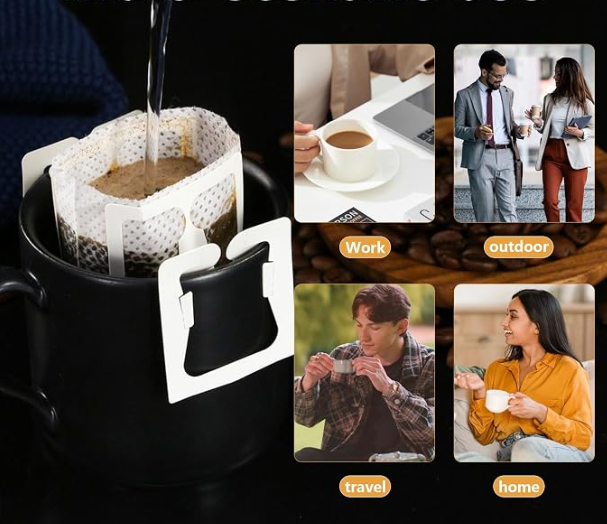
A drip coffee bag holds a measured portion of ground coffee inside a filter with fold-out hanging supports, then protects it inside an individual outer pouch. Consumers need only a cup and hot water to brew filter coffee. This makes the format suitable for offices, hotels, guesthouses, travel, gifting, and online retail.
“Ukrainian coffee” generally refers to coffee roasted, sold, or developed for consumers in Ukraine. It does not necessarily mean that the beans were grown in Ukraine. Brands should clearly identify actual bean origin, roast date, blend information, and intended brewing method.
Why Do Drip Coffee Bags Suit Ukrainian Coffee Brands?
Drip coffee bags offer a compact format with controlled portions, clear product information, and little dependence on brewing equipment. Consumers do not need a coffee machine, dripper, or scale; they simply hang the filter over a cup and add hot water.
This format can be developed for:
- Specialty single-origin coffee;
- Medium-roast and medium-dark roast blends;
- New-product sampling and seasonal releases;
- Hotel, guesthouse, and business hospitality coffee;
- E-commerce retail and subscription services;
- Gift boxes, event giveaways, and corporate gifts;
- Travel, outdoor, and mobile-work coffee;
- Private-label and contract-packing projects.
The individual pouch can also present roast date, processing method, origin, flavor notes, recommended water temperature, and brewing instructions.
Turning One Cup of Coffee into a Repeatable Experience
The value of a drip coffee bag is not convenience alone. For a roaster, it is a way to standardize the conditions behind one cup of coffee: a fixed dose, a specific filter, a recommended water volume, and a clear brewing time.
This product experience can be managed through four connected elements:
- Coffee recipe: origin, blend, roast, and grind;
- Pack dose: the amount of coffee in each bag;
- Brewing structure: filter dimensions, hanging support design, and water flow;
- User guidance: water temperature, pouring stages, total volume, and waiting time.
When these elements work together, consumers can achieve a cup closer to the brand’s intended flavor without professional coffee equipment.
How Does an Automatic Drip Coffee Bag Packing Machine Work?
An automatic drip coffee bag packing machine integrates dosing, filter-bag forming, and outer-pouch sealing into a continuous production process. Typical stages include:
- Feeding roasted coffee ground for drip brewing into the system;
- Filling each bag to a preset weight;
- Placing ground coffee into filter material;
- Forming the inner filter bag with hanging supports;
- Sealing and cutting the inner bag;
- Transferring it into an individual outer pouch;
- Heat-sealing, cutting, and discharging the finished package;
- Applying optional dates, batch numbers, or traceability codes.
Automation can reduce manual transfer and improve consistency in fill weight, support placement, inner-bag appearance, and outer-pouch sealing.
How Does Package Quality Affect Consumer Experience?
Aroma Protection
Ground coffee is sensitive to oxygen, moisture, light, and external odors. Individual outer pouches should provide suitable oxygen, moisture, light, and heat-sealing performance for the intended shelf life, logistics requirements, and storage conditions.
Seal Reliability
An incomplete outer-pouch seal may affect storage performance. Coffee in the seal area, wrinkled film, or unstable sealing settings can compromise package integrity. Seal appearance, strength, and cutting alignment should be checked during production.
Brewing Consistency
Even a visually attractive package can disappoint if the grind, dose, and filter material are not matched. Water may flow too quickly or slowly, and the coffee may be under- or over-extracted. Finished-product evaluation should include real brewing tests, not only packaging inspections.
What Should You Consider When Selecting a Packing Machine?
Run Trials with Actual Coffee
Coffee particle size, density, roast level, oil content, and static electricity vary by product. Equipment trials should use the real production formula rather than a generic sample.
Define Dose and Target Cup Size
The coffee dose should match recommended water volume, cup format, and intended strength. The dosing system must meet the required weight range and stability.
Confirm Filter and Outer-Film Compatibility
Filter material should balance water flow, sealing performance, and food-contact suitability. Outer-pouch film should be compatible with bag forming, registration, cutting, and heat sealing. Use actual production materials during testing.
Plan for Cleaning, Changeover, and Batch Management
Hoppers, dosing components, and filling paths should be easy to clean. If several origins or blends are produced, efficient changeover helps limit carryover and flavor cross-contact. Date and batch coding can support internal traceability management.
Ukrainian Coffee Drip Bag Packaging Solutions
Xiamen Sengong Packing Equipment Co.,Ltd provides drip coffee bag packing equipment and related solutions for coffee roasters, coffee brands, private-label businesses, and contract packers.
Businesses can discuss coffee characteristics, fill weight, filter material, outer-pouch film, and output targets with the supplier. Trials using real coffee and packaging materials can optimize the process and reduce compatibility risks before commercial production.
Learn more about equipment and packaging solutions:
- Xiamen Sengong Packing Equipment Co.,Ltd – Quicker Pack
- Xiamen Sengong Packing Equipment Co.,Ltd – VIPacker
Conclusion
A drip coffee bag turns one cup of coffee into a repeatable, portable, and easy-to-understand consumer experience. For Ukrainian coffee brands, it can introduce specialty products while supporting hospitality, e-commerce, gifting, and mobile consumption.
An automatic drip coffee bag packing machine enables consistent dosing, hanging-ear filter forming, and individual outer-pouch sealing. Product success depends on the coordination of coffee recipe, grind, filter, fill weight, pouch material, and brewing guidance.