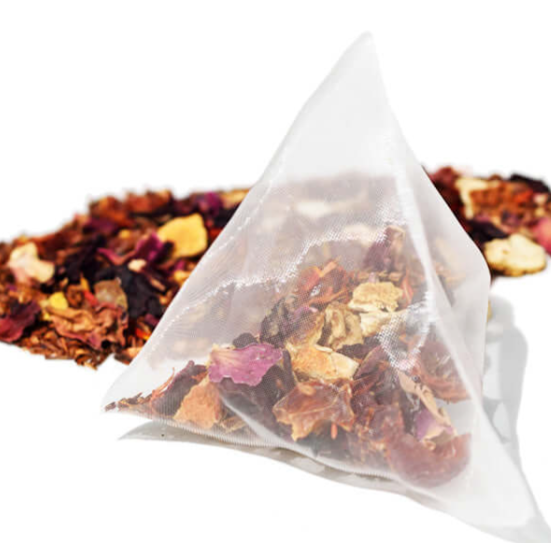
What Is Rooibos Tea?
Rooibos tea, also known as red bush tea, is mainly produced from a leguminous plant native to South Africa. Unlike black tea and green tea, rooibos does not come from the traditional Camellia sinensis tea plant.
Fermented rooibos generally has a reddish-brown appearance and a smooth flavor with natural sweetness, woody notes, and a mild nutty aroma. In addition to pure rooibos, it can be blended with lemon, vanilla, flower petals, dried fruit, cinnamon, and other spices to create a wide variety of flavored products.
Rooibos material is usually relatively fine and free-flowing, although it may also generate a certain amount of tea dust. Tea manufacturers must therefore choose a suitable dosing system, filter material, and sealing method when producing rooibos tea bags.
A pyramid tea bag packing machine combines efficient production, attractive product presentation, and brewing convenience, making it an ideal packaging solution for commercial rooibos tea products.
What Is a Pyramid Tea Bag Packing Machine?
A pyramid tea bag packing machine, also called a triangle tea bag packing machine, is an automated system that can complete material dosing, filter-material feeding, bag forming, filling, sealing, cutting, and finished-product discharge.
Compared with a conventional flat tea bag, a pyramid tea bag provides more internal space. Hot water can circulate more freely inside the bag, allowing the rooibos and blended ingredients to make better contact with the water.
Some machines can switch between pyramid and rectangular tea bag formats. Optional features may include a string and tag, individual outer-envelope packaging, date coding, and finished-product conveying.
Why Is Rooibos Suitable for Pyramid Tea Bag Packaging?
1. Improved Brewing Performance
The larger internal space of a pyramid tea bag allows hot water to circulate around the rooibos material. For blends containing flower petals, dried fruit, or herbs, the three-dimensional bag also provides more room for the different ingredients to expand and infuse.
2. Better Display of Natural Ingredients
Transparent or semi-transparent mesh materials allow consumers to see the reddish-brown rooibos, flower petals, fruit pieces, and spices inside the tea bag. This visible presentation can enhance the product’s natural and premium image.
3. Higher Perceived Product Value
Pyramid tea bags have an attractive appearance and are suitable for premium retail tea, gift boxes, hotel supplies, restaurant service, office tea, and e-commerce products. Their distinctive shape can help brands differentiate their rooibos products from conventional flat tea bags.
4. Standardized Dosing
An automatic dosing system controls the quantity filled into each tea bag according to preset parameters. Consistent filling weight helps maintain uniform flavor, production cost, and package appearance.
5. Support for Multiple Rooibos Products
A pyramid tea bag packing machine can be used for products such as:
- Pure fermented rooibos tea
- Green rooibos tea
- Vanilla rooibos tea
- Lemon rooibos tea
- Fruit-flavored rooibos blends
- Rooibos and flower blends
- Cinnamon and spice rooibos tea
- Caffeine-free herbal blends
Because different recipes have different particle sizes and flow characteristics, each formulation should be tested before full-scale production.
How Does a Pyramid Tea Bag Packing Machine Work?
The automatic rooibos tea packaging process generally includes the following steps:
- Rooibos or blended ingredients are loaded into the feeding system.
- The dosing unit measures the preset quantity.
- The filter material is automatically unwound.
- The machine forms a pyramid or rectangular tea bag.
- The measured material is filled into the bag.
- The tea bag is automatically sealed and cut.
- A string and tag are added if required.
- The inner tea bag enters the individual outer-envelope packaging section.
- Finished products are discharged for cartoning or secondary packaging.
Automated production can reduce repetitive manual work while improving packaging speed and product consistency.
Important Considerations When Packaging Rooibos Tea
Dosing Accuracy
Rooibos material is generally fine and may contain tea dust or irregular particles. The dosing method must therefore match the characteristics of the actual product.
Depending on the formulation, manufacturers may use an electronic weighing system, volumetric cup, or another dosing solution. If the blend contains flower petals, dried fruit, and spices of different sizes, mixture uniformity should also be monitored to prevent ingredient separation during production.
Tea-Dust Control
Fine rooibos particles may generate dust around the feeding and sealing areas. If dust enters the seal, it could affect sealing quality.
The machine should have a stable feeding structure, while its dosing and sealing components should be cleaned regularly. A dust-collection system may also be considered for products that produce significant amounts of fine particles.
Filter-Material Selection
Common pyramid tea bag materials include nylon mesh, nonwoven filter material, and PLA-based material. The following factors should be considered when selecting the material:
- Filtration performance
- Leakage of fine rooibos particles
- Heat-sealing or ultrasonic-sealing performance
- Transparency
- Heat resistance during brewing
- Product positioning and target-market requirements
- Material cost and supply stability
Because rooibos particles can be finer than whole tea leaves, actual brewing and leakage tests should be conducted before confirming the filter material.
Individual Outer Envelopes
An individual outer envelope can help protect the tea bag from moisture, dust, unwanted odors, and environmental exposure. It also provides additional printable space for branding and product information.
For products intended for supermarkets, e-commerce, hotels, or export markets, a pyramid inner bag combined with a sealed outer envelope may be an appropriate packaging format.
String and Tag
A string-and-tag tea bag is convenient for consumers because it can be removed from the cup without a spoon. The tag can display the brand logo, product name, brewing instructions, or other information.
Benefits of Automatic Rooibos Tea Packaging
Using a pyramid tea bag packing machine can help manufacturers establish a more standardized rooibos tea packaging process. Its main advantages include:
- Higher tea bag production efficiency
- Less manual measuring and filling
- More consistent filling weights
- Reduced product and packaging-material waste
- Support for pyramid and rectangular tea bags
- Optional string, tag, and outer-envelope functions
- Improved product appearance and brand image
- Flexible development of different rooibos blends
- Suitability for retail, gift, hotel, and e-commerce markets
- A stronger foundation for scaled production and product expansion
How to Select a Rooibos Tea Packing Machine
Before purchasing a pyramid tea bag packing machine, manufacturers should provide the equipment supplier with actual rooibos samples, blend formulations, and the intended packaging materials for testing.
Important factors to confirm include:
- Particle size and flowability of the rooibos
- Amount of fine powder in the material
- Presence of flower petals, dried fruit, or spices
- Target filling weight per bag
- Required pyramid or rectangular bag format
- Need for a string and tag
- Need for an individual outer envelope
- Intended filter material
- Target hourly or daily production capacity
- Materials used for product-contact components
- Ease of cleaning and product changeovers
- Date coding, inspection, or cartoning requirements
- Availability of training, spare parts, and after-sales support
An actual packaging trial helps evaluate feeding stability, dosing accuracy, sealing performance, particle leakage, and the appearance of finished tea bags.
Rooibos Tea Packaging Solutions from Xiamen Sengong Packing Equipment Co., Ltd.
Xiamen Sengong Packing Equipment Co., Ltd. supplies automatic packaging equipment for tea, herbal products, and other small-dose materials. Equipment configurations can be recommended according to the fine particle size, varied formulations, and dust characteristics of rooibos tea.
A packaging solution can be customized according to requirements such as:
- Filling weight per rooibos tea bag
- Pyramid or rectangular tea bag format
- Nylon, nonwoven, or PLA filter material
- String-and-tag function
- Individual outer-envelope packaging
- Date and batch-code printing
- Dosing requirements for pure or blended products
- Required production speed and automation level
Before confirming a machine solution, customers are encouraged to provide samples of their rooibos and blended ingredients. Sample testing helps evaluate dosing, feeding, forming, and sealing performance.
For more information about pyramid tea bag packing machines and other automatic packaging equipment, visit:
Market Trends in Rooibos Tea Packaging
As consumers show greater interest in caffeine-free beverages, herbal infusions, and convenient single-serve products, rooibos is increasingly being used in tea bags and specialty blends.
Pyramid tea bags provide a convenient brewing experience while clearly displaying flower petals, fruit pieces, and herbal ingredients. Brands can differentiate their products through bag shape, printed tags, outer-envelope design, and gift-box packaging.
Rooibos product development may include:
- Pure natural rooibos
- Fruit and floral blends
- Premium retail and gift packaging
- Products for hotels, restaurants, and offices
- Portable tea bags with individual outer envelopes
- Customized formulations for different markets
Packaging equipment must therefore offer reliable material handling, stable dosing, and compatibility with multiple bag formats.
Conclusion
Rooibos tea has a distinctive reddish-brown appearance, a smooth flavor, and excellent potential for blended products. Pyramid tea bag packaging provides more brewing space while improving ingredient visibility, convenience, and perceived product value.
Selecting a suitable pyramid tea bag packing machine according to particle size, dust level, filling weight, filter material, and production capacity can help manufacturers improve efficiency, maintain consistent packaging quality, and develop more competitive tea products.
Xiamen Sengong Packing Equipment Co., Ltd. can provide equipment solutions for different rooibos and blended-tea packaging requirements. More product information is available at www.quickerpack.com and www.vipacker.com.
Frequently Asked Questions
Can rooibos tea be packed in pyramid tea bags?
Yes. Pyramid tea bags can be used for both pure rooibos and blends containing flower petals, dried fruit, or spices. Because rooibos can contain fine particles, a filter material with suitable filtration performance should be selected.
Can fine rooibos particles leak from the tea bag?
Leakage depends on the rooibos particle size and the pore size of the filter material. Testing the actual product and intended packaging material is recommended.
Can one machine package different rooibos formulations?
A suitable machine can generally handle multiple recipes within its dosing and material-handling range. The feeding and dosing components should be cleaned during product changeovers, and machine parameters may need to be adjusted for each formulation.
Does a pyramid rooibos tea bag need an individual outer envelope?
An individual outer envelope is recommended when additional moisture protection, hygiene, aroma retention, or branding space is required. The film structure should be selected according to the desired shelf life, distribution channel, and storage conditions.
Why is material testing necessary before buying a machine?
Material testing verifies the flowability, dosing accuracy, sealing quality, filtration performance, and finished appearance of the rooibos tea bag. It helps manufacturers select a more suitable machine configuration.