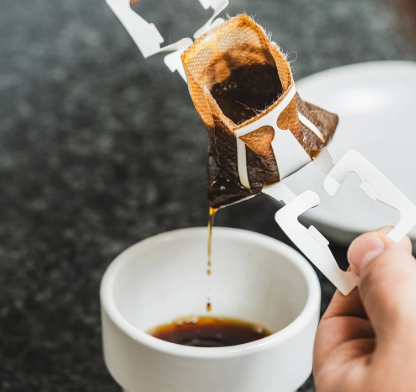
Australische koffie: Developing a Better Black Coffee Experience with Ultrasonic Drip Bag Packaging
From a Flat White to a Different Coffee Experience
Flat whites, lattes, and other espresso-based drinks are recognizable parts of Australian coffee culture. Tourism Australia includes the flat white in its guide to local coffee styles. Echter, a blend developed for milk-based coffee may perform differently when brewed as black filter coffee.
For Australian roasters, drip bags are not simply a way to place a café drink inside a sachet. They create another way to experience the brand: distinctive ground coffee without an espresso machine.
An ultrasonic drip coffee bag packing machine can portion a validated ground coffee into filters and individual envelopes. Consumers need only a cup and hot water to prepare a single serving.
A Milk-Coffee Blend Must Pass a Black-Coffee Test
A blend delivering cocoa, karamel, and body in milk may show different acidity, bitterheid, and finish when brewed through a drip filter and served black. Both the extraction method and the absence of milk change the experience.
Development can follow three steps:
Eerst, retain the formula and change the brewing method.
Use a grind suitable for drip filtration and assess whether the existing blend remains balanced as black coffee.
Seconde, adjust the roast or blend where necessary.
If the cup is dry, thin, or unbalanced, use roast trials and tasting to guide changes rather than simply increasing the dose.
Derde, define the product.
Decide whether it is an everyday black coffee, a specialty single-origin drip bag, or a coffee intended for a small addition of milk after brewing. Iedereen heeft passende instructies nodig.
Dripkoffie is geen oploskoffie. Heet water alleen kan de drukextractie van een espresso of de gestoomde melktextuur van een plat wit niet reproduceren. Nauwkeurige productpositionering helpt consumenten te weten wat ze kunnen verwachten.
Leg de relatie tussen groeien uit, Roosteren, en verpakking
Een Australisch koffieproduct kan de receptuur en brandexpertise van een lokaal merk benadrukken, maar ‘geroosterd in Australië’ en ‘gekweekt in Australië’ zijn verschillende beweringen.
Als geïmporteerde sperziebonen worden lokaal geroosterd, hun oorsprong nauwkeurig identificeren. Als er in Australië geteelde koffie wordt gebruikt, ondersteunende sourcingrecords bewaren. Een mengsel mag niet impliceren dat alle ingrediënten van één oorsprong komen, tenzij dat waar is.
Geverifieerde herkomst, duidelijke braadinformatie, en een consistente smaak bieden een grotere waarde dan een breed geografisch label.
Ultrasone afdichting lost een structurele taak op, Niet de ontwikkeling van formules
Ultrasone technologie in een druppelkoffiezakverpakkingsmachine wordt doorgaans gebruikt om compatibele binnenfiltermaterialen te verbinden. Hoogfrequente mechanische trillingen veroorzaken een plaatselijk effect op het gewricht, waardoor geschikte materialen kunnen worden aangesloten.
Het is geen koffie-extractie- of versheidsbehandelingsproces. De filtercompatibiliteit moet worden bevestigd vanwege de structuur- en afdichtingsvereisten; niet elk papier- of vezelmateriaal werkt met hetzelfde proces.
Afhankelijk van de machineconfiguratie, productie kan omvatten:
- Automatische dosering en vulling van gemalen koffie;
- Vorming van binnenfilterzakken en ultrasone afdichting;
- Hantering van hangende oorfilters;
- Individuele verpakking en afdichting van de buitenenvelop;
- Datum- en batchcodering;
- Stroomafwaarts kartonneren of assortimentsverpakken.
De buitenomhulling biedt bescherming vóór opening en heeft een afdichtingsmethode nodig die geschikt is voor het materiaal ervan. Ultrasone binnenfilterafdichting betekent niet dat de buitenverpakking geen hitteafdichting nodig heeft.
De VIPacker C19H ultrasone koffiedruppelmachine voor binnen- en buitenzakken geeft een voorbeeld van een uitrusting. De pagina beschrijft de binnen- en buitenverpakking, temperatuurregeling van de buitenenvelop, en optionele datumafdruk- en gemakkelijk te scheuren apparaten. De werkelijke capaciteiten moeten worden bevestigd door middel van het geselecteerde model en materiaalproeven.
Elke koffieformule heeft gevalideerde verpakkingsinstellingen nodig
Verschillende brandingen kunnen de bulkdichtheid van de gemalen koffie veranderen, stroom, en verdeling van fijne deeltjes. Gelijke vulgewichten kunnen verschillende volumes in een filter in beslag nemen.
Proeven moeten dit bevestigen:
- Maalcompatibiliteit met het geselecteerde filter;
- Vulgewicht afgestemd op het doelvolume van de kop;
- Ruimte voor bevochtiging en uitzetting;
- Of het gieten nu plasvorming veroorzaakt of een ongewoon snelle afvoer;
- Compatibiliteit met hangende oren met de beoogde cups;
- Smaakbalans terwijl de drank afkoelt.
Een soepele bediening van de machine alleen bepaalt niet de productkwaliteit. Het laatste validatiepunt is dat de koffieconsument volgens de instructies zet.
Continue productie vereist zowel gewichts- als afdichtingscontrole
Premium infuuszakken hebben een stabiele dosering en afdichting nodig. Grond die het afdichtingsgebied binnendringt, kan een onvolledige hechting veroorzaken, lekkage, of filterschade.
Wanneer deeltjes vast komen te zitten, onderzoek de timing van het vullen, landingspositie, boetes, en kanaalconditie. Het verhogen van het ultrasone vermogen alleen is geen volledige oplossing.
Monstername van opeenvolgende voltooide verpakkingen voor droge inspectie en brouwtests. Controleer het gewicht, zeehonden, ondersteunende positie, en toestand van de envelop vóór het brouwen; beoordeel vervolgens de integriteit van het natte filter, stabiliteit ondersteunen, en afwatering. Dit brengt problemen aan het licht die een enkel demonstratiemonster kan missen.
Aromabescherming dekt het gehele proces na het malen
Gemalen koffie heeft een groot blootgesteld oppervlak. Enveloppen met een hoge barrière kunnen de zuurstof helpen beperken, vochtigheid, en geurblootstelling, maar ze kunnen kwaliteitsveranderingen die vóór het verzegelen plaatsvonden, niet ongedaan maken.
De productie zou moeten beheren:
- Ontgassing na het braden;
- De vertraging tussen het malen en het verpakken;
- Verblijftijd van de trechter;
- Integriteit van de afdichting van de buitenste envelop;
- Actuele opslag- en transportomstandigheden.
Als stikstofspoeling wordt gebruikt, restzuurstof beoordelen, afdichtingsprestaties, en sensorische resultaten na opslag. Houdbaarheid moet voortkomen uit het testen van het daadwerkelijke product en de verpakking, in plaats van het kopiëren van de houdbaarheidstermijn van een andere koffie.
Schrijf instructies voor nieuwe gebruikers van lekzakken
Het kan zijn dat consumenten geen zwanenhalsketel bezitten of overgietervaring hebben. Op de verpakking moet uitleg worden gegeven over het uitvouwen van de steunen, het bevestigen van het filter, in fasen gieten, en het zo eenvoudig mogelijk verwijderen van de tas.
Nuttige productdetails zijn onder meer:
- Oorsprong van bonen, mengen, en braadlocatie;
- Nauwkeurige smaakbeschrijvingen;
- Vulgewicht en aanbevolen watervolume;
- Watertemperatuur en zetstappen;
- Of het nu gaat om een zwarte portie of om achteraf melk toe te voegen, wordt aanbevolen;
- Batchdetails, begeleiding bij het opbergen, en toepasselijke etiketinformatie.
Als “chocoladetonen” de smaak van de koffie beschrijven in plaats van een toegevoegd ingrediënt, tekst en afbeeldingen mogen niet de suggestie wekken dat er sprake is van een gearomatiseerd melkkoffieproduct.
Breng de echte koffie en beker naar apparatuurbesprekingen
Voor Australisch gebrande koffie, speciale zwarte dripkoffie, of café-private-labelproducten, contact Xiamen Sengong Packing Equipment Co., Bvba om de vereisten voor binnen- en buitenverpakkingen te bespreken. Gerelateerde apparatuur kan ook worden onderzocht via VIPacker.
Zorg voor commerciële koffie, filtermateriaal, hangende oorstructuur, envelop, en het beoogde vulgewicht, samen met het beoogde kopjesvolume en de zetstandaard. Snelheid, doseringsbereik, materiële compatibiliteit, en optionele functies moeten worden bevestigd via de daadwerkelijke configuratie en proefresultaten.
Conclusie
De sleutel tot de ontwikkeling van Australische dripkoffie is niet het reproduceren van een cafédrank op basis van melk. Het vertaalt de smaakbenadering van een brander naar een bevredigende filterkoffie-ervaring. Door de blend opnieuw te valideren, malen, en kopvolume, en vervolgens afzonderlijk de ultrasone afdichting van het binnenfilter en de bescherming van de buitenomhulling bevestigen, merken kunnen een duidelijk creëren, consistent product voor één portie dat het waard is om opnieuw te kopen.