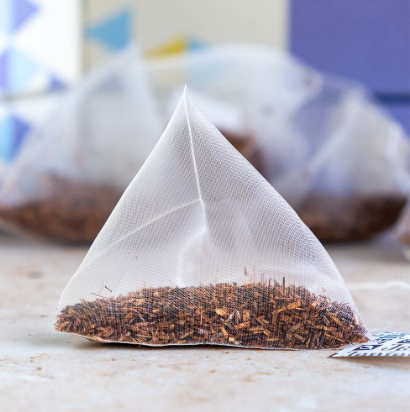
Letting Consumers See the Tea Ingredients Is Part of the Product Value
The Moldovan tea market can include black tea, herbal tea, fruit tea, and many blended tea products. In this article, “Moldova herbal tea and black tea” refers to products developed, blended, packed, or sold for the Moldovan market. Black tea and some botanical ingredients may come from different supply regions, so brands should focus on transparent ingredient information, blending logic, and real flavor instead of using vague origin claims.
For whole-leaf black tea, cut botanicals, fruit pieces, flower petals, or multi-ingredient blends, traditional flat paper tea bags may not fully display the ingredients or provide enough space for them to expand during brewing. A pyramid tea bag has a three-dimensional structure that creates more internal volume, allowing tea leaves and botanical ingredients to move, hydrate, and release aroma more freely in hot water.
When consumers can see tea leaves, petals, or fruit pieces, packaging itself becomes part of product transparency. This format is particularly suitable for specialty retail, gift boxes, e-commerce sampling, hotel rooms, and office tea service.
Black Tea and Herbal Tea Need Different Development Approaches
Black tea and herbal tea can be packed in the same pyramid format, but their ingredient characteristics are different. Black tea development focuses on liquor, aroma, strength, and a balanced astringency. Herbal tea requires attention to particle size, aroma compatibility, color, and overall harmony after infusion.
Brands can build product ranges such as:
- Classic Black Tea: centered on black tea leaves with malty, caramel-like, fruity, or full-bodied character;
- Herbal Blend Tea: using suitable botanical ingredients with layered aroma and visual appeal;
- Black Tea with Flowers or Fruit: combining black tea with petals, dried fruit, or other botanical ingredients;
- Gift Discovery Sets: multiple flavors that introduce consumers to different tea styles;
- Hotel and Office Tea: focused on convenient brewing, individual hygiene, and dependable flavor release.
Development should not rely on visual ingredient combinations alone. Each blend should be brewed and evaluated to confirm aroma balance, clarity of infusion, filter-material compatibility, and whether excessive fines affect the drinking experience.
How a Pyramid Tea Bag Packing Machine Preserves Ingredient Appearance
A pyramid tea bag packing machine integrates dosing, bag forming, sealing, and individual wrapping while helping preserve the appearance of tea leaves and botanical ingredients.
Depending on the equipment solution, a typical process may include:
- Automatic measuring and filling of black tea, herbal tea, or blended ingredients;
- Forming three-dimensional pyramid tea bags with suitable filter material;
- Sealing the tea bag by ultrasonic or heat-sealing technology;
- Adding a string and tag, or producing tagless tea bags;
- Packing each tea bag into an individual outer envelope;
- Optional connection with carton, gift-box, or multipack processes.
For products containing petals, fruit pieces, or cut botanicals, trials should assess whether ingredients bridge, break, create dust, or cause fill-weight variation. Ingredient size, feeding method, and tea-bag structure should be evaluated together.
An Individual Outer Envelope Is Also a Flavor-Management Tool
Both black tea and herbal tea can be affected by humidity, light, oxygen, and surrounding odors. Pyramid bags allow consumers to see the ingredients, while individual outer envelopes help the product remain better protected during storage, transport, and retail display.
Brands can select suitable barrier properties, sealing methods, and packaging designs according to product characteristics. Reliable envelope sealing is especially important for aromatic herbal blends. Gift-box and e-commerce projects should also verify transport resistance and the visual integrity of finished packs.
Any statement about shelf life, aroma retention, or ingredient freshness should be based on actual tea leaves, botanical ingredients, packaging structure, sealing parameters, storage conditions, and finished-product testing—not simply on the tea-bag shape or packaging-material name.
Move from Seeing Ingredients to Understanding the Product
Pyramid tea bags have strong visual appeal, but packaging copy should also help consumers understand what they are buying. Clearly show:
- A complete ingredient list for black tea, herbs, and fruit ingredients;
- Whether the product contains caffeine, so black tea and herbal tea are not confused;
- Flavor description and recommended steeping time;
- Suggested water temperature and water volume per bag;
- Tea-bag count, net weight, storage guidance, and batch information;
- Required language and food-label details for the destination market.
For herbal tea, use accurate and neutral sensory descriptions, such as floral, fruity, fresh, or gentle. Avoid unverified health, therapeutic, or functional claims.
Sampling Determines Whether a Tea Bag Is Truly Ready for Market
Before selecting a pyramid tea bag packing machine, conduct trials with the real black tea, botanicals, filter material, and outer-envelope film intended for sale. Beyond speed, assess:
- Ingredient flow and dosing accuracy;
- Whether tea leaves, petals, or fruit pieces are visibly damaged;
- Whether pyramid tea bags are full, well formed, and securely sealed;
- Whether strings and tags are positioned neatly;
- Whether individual outer envelopes are flat and completely sealed;
- Whether appearance, aroma, and brewing performance remain stable after storage and transport.
Xiamen Sengong Packing Equipment Co.,Ltd provides equipment solutions for tea, herbal tea, and food packaging projects. For Moldova herbal tea, black tea, fruit-and-flower blends, and pyramid tea bag projects, visit Quicker Pack and VIPacker to explore relevant packaging equipment and evaluate it using your actual ingredients, packaging materials, and production requirements.
Conclusion
Moldova herbal tea and black tea pyramid-bag products can combine ingredient visibility, brewing convenience, and brand storytelling into a more appealing retail experience. With well-designed blends, suitable tea-bag capacity, dependable individual sealing, and a reliable pyramid tea bag packing machine, brands can create quality tea products for everyday consumption, gifting, e-commerce, and hospitality.