Kenyan Coffee: Turning Grade Information into a Better Cup with Ultrasonic Drip Bag Packaging
Kenya AA Is a Starting Point, Not a Complete Quality Assessment
Coffee buyers often encounter Kenyan designations such as AA, AB, or PB. These provide useful information about green-coffee sorting categories, but they do not replace an assessment of flavor.
Kenyan grading includes physical characteristics such as bean size, density, and shape, alongside separate evaluation of green, roasted, and cup attributes. “AA” should therefore not be presented as a fixed cupping score or a guarantee that every lot will taste the same.
For a specialty brand, more meaningful information includes the actual growing area, producer or processing facility, processing method, roast profile, and cupping results. Combining these details with consistent drip bag packaging helps consumers understand the coffee they are buying.
Move from Buying a Grade to Choosing a Flavor
Kenyan drip coffee bags can be positioned around clear cup profiles rather than relying only on prominent AA lettering.
Depending on the actual lots, a brand might develop:
- Bright and Fruit-Led Coffee: highlighting confirmed fruit aromas, clear acidity, and a clean finish;
- Sweet and Balanced Coffee: using an appropriate roast to emphasize sweetness, body, and a gentler overall profile.
These are development directions, not universal descriptions of Kenyan coffee. Berry, citrus, or caramel notes should come from tasting the actual product rather than applying a predetermined origin stereotype.
If no fruit or spices are added, the packaging should also avoid implying that sensory flavor notes are ingredients.
Set the Standard at the Consumer’s Cup
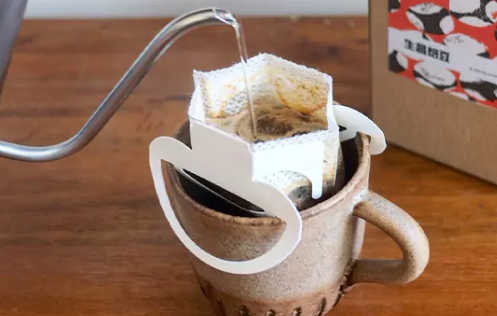
A drip coffee bag, also known as a hanging-ear coffee bag, contains measured ground coffee inside a filter supported over a cup. It simplifies preparation but does not automatically remove variation caused by grinding, pouring, or filtration.
Kenyan coffee development should begin with the target cup volume and flavor, then match:
- Roast development and grind distribution;
- Fill weight and internal filter capacity;
- Filter permeability and fine-particle retention;
- Water temperature, total volume, and pouring rhythm;
- Drainage time and final beverage strength.
Pleasant, bright acidity is not the same as sharp sourness caused by insufficient extraction. If the cup is thin, lacks sweetness, and tastes unbalanced, examine grinding and brewing conditions before attributing the result solely to the coffee’s origin.
Validate Ultrasonic Inner Sealing and Outer Protection Separately
Ultrasonic technology in a drip coffee bag packing machine is typically used to bond compatible inner filter materials. Its purpose is to create a dependable filter structure that retains grounds and supports brewing.
The individual outer envelope provides protection before opening. Its sealing method must match its material structure. Ultrasonic inner-filter sealing does not mean that the complete package requires no heat sealing.
Depending on the model and options, a line may integrate dosing, inner-bag forming and sealing, hanging-ear filter handling, individual envelopes, date coding, and cartoning. Nitrogen flushing, easy-opening features, and other accessories should be confirmed separately.
For example, the VIPacker C19H ultrasonic drip coffee inner and outer bag machine page describes inner-and-outer packaging, outer-bag temperature control, and optional date-printing and easy-tear devices. Actual performance should be established through trials with the selected configuration and materials.
Three Checks Determine Whether the Packaging Works
First: Is fill weight consistent?
Sample consecutive packs and examine the distribution, not only the average. A green-bean grade does not determine dosing settings after grinding; different roasted batches still need validation.
Second: Is the sealing area clean?
Fine coffee particles entering the ultrasonic sealing area can weaken the bond. Check trapped grounds, incomplete seals, edge damage, and filter integrity after brewing. Increasing power does not replace correct filling timing and dust control.
Third: Is the cup repeatable?
Brew consecutive finished packs according to the same instructions. Record drainage, sweetness, acidity, and strength to confirm that the packaged product still meets its development target.
These checks should form a combined acceptance standard. Continuous bag production alone does not make a product market-ready.
Aroma Protection Begins Before the Seal
Ground coffee is more exposed to air and environmental conditions than whole beans. Production organization matters: the delay between grinding and packing, time spent in the hopper, and post-roast degassing should all be considered.
A high-barrier envelope can help limit oxygen, humidity, and odor exposure, but it cannot reverse quality changes that happened before sealing. If nitrogen flushing is used, assess residual oxygen, package integrity, and storage performance rather than merely confirming that the machine has a gas connection.
Shelf life must be validated with the actual coffee, packaging materials, and expected distribution conditions. It should not be copied from a coffee of another origin.
Make the Label Explain This Particular Kenyan Coffee
A well-presented specialty drip bag can state:
- Kenyan origin and a traceable region or lot;
- AA, AB, or other sorting information without overstating its meaning;
- Actual processing method, roast level, and flavor notes;
- Fill weight, recommended water volume, and brewing steps;
- Roast, packing, or production-batch information;
- Storage guidance and applicable product-label details.
A batch-linked QR code or product page can provide producer information, tasting records, and real brewing videos. This makes traceability useful rather than decorative.
Start Equipment Discussions with the Actual Product
For Kenyan single-origin drip bags, specialty tasting sets, or retail coffee products, contact Xiamen Sengong Packing Equipment Co., Ltd to discuss inner-and-outer packaging needs, and visit VIPacker to review relevant equipment options.
Bring the coffee, filter material, hanging-ear structure, outer envelope, and target fill weight intended for sale. Also define the desired cup volume and brewing standard. Speed, dosing range, material compatibility, and accessory functions should be confirmed against the selected model and trial results.
Conclusion
The value of Kenyan coffee should extend beyond an AA label. Combining verified lot information, a clear flavor target, consistent dosing, dependable ultrasonic inner-filter sealing, and suitable outer-envelope protection helps turn distinctive coffee into a single-cup product consumers can trust and reorder.