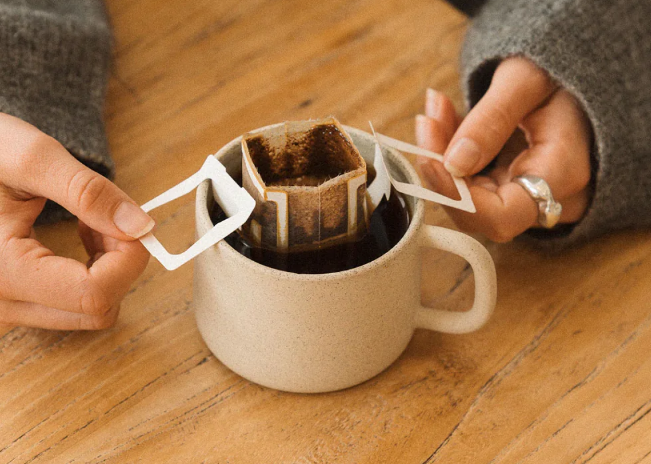
Emballage de café espagnol: Apporter la culture du café sur le marché des sacs goutte à goutte en portion individuelle
L'Espagne a une culture du café distinctive. Du café servi avec les viennoiseries du petit-déjeuner aux courtes pauses-café qui rythment la journée, le café est un élément important de la vie sociale et des routines quotidiennes. Boissons comme le café con leche, couper, et café solo confèrent à la culture espagnole du café son caractère reconnaissable.
Le « café espagnol » fait généralement référence à la culture du café du pays., produits torréfiés localement, ou des mélanges à l'espagnole; cela ne signifie pas nécessairement que les grains de café ont été cultivés en Espagne. L'emballage doit indiquer avec précision l'origine du grain, détails du mélange, profil de rôti, et la méthode de brassage prévue.
Pour les torréfacteurs, propriétaires de marques, et emballeurs sous contrat, Les sacs de café filtre offrent un moyen pratique d'introduire du café de style espagnol dans la vente au détail, commerce électronique, hospitalité, cadeau, et marchés du voyage. Une machine d'emballage automatique de sacs de café filtre mesure le café moulu, le remplit dans un sac filtrant à oreilles pendantes, et le scelle dans une pochette extérieure individuelle.
Pourquoi le café de style espagnol convient-il aux sacs de café filtre?
Un sachet de café filtre combine du café moulu, matériau filtrant, et supports dépliables dans un seul produit en portion individuelle. Les consommateurs ouvrent le sachet, placer les supports sur une tasse, et versez progressivement de l'eau chaude sur le sol.
Ce format peut être utilisé pour:
- Mélanges de cafés de spécialité à l'espagnole;
- Café individuel torréfié moyennement foncé;
- Produits à base de café pour le petit-déjeuner;
- Café dans les chambres d'hôtel et au bureau;
- Voyage, camping, et café en plein air;
- Produits de commerce électronique et d'abonnement au café;
- Cadeaux saisonniers, cadeaux d'entreprise, et dégustations de collections;
- Café de marque privée et emballé sous contrat.
Le sachet individuel offre également de la place pour l'origine des grains, niveau de rôtissage, notes de dégustation, instructions de brassage, date de fabrication, et codes QR.
De la culture de l’espresso au brassage goutte à goutte: Le développement de produits est important
De nombreuses boissons à base de café espagnoles populaires, y compris café solo, couper, et café au lait, sont à base d'espresso. L'espresso utilise une taille de mouture différente, pression de brassage, et procédé d'extraction à partir d'un sachet de café filtre.
Les marques ne devraient pas simplement placer un expresso finement moulu dans un sac collecteur.. Le café de style espagnol destiné à l'infusion filtrée doit être élaboré avec une mouture appropriée, matériau filtrant, poids de remplissage, volume de la tasse, et temps d'infusion.
Pendant le développement du produit, les entreprises devraient vérifier:
- Débit d'eau stable et constant;
- Aucun blocage du filtre;
- Un temps de brassage adapté aux consommateurs;
- Extraction équilibrée sans amertume excessive ni saveur faible;
- Une relation correcte entre la dose et le volume d’eau recommandé;
- Un profil de tasse final aligné sur le positionnement du produit à l'espagnole.
Des formulations claires telles que « café filtre à l'espagnole » ou « café torréfié espagnol pour infusion goutte à goutte » aident les consommateurs à comprendre que le produit est conçu pour l'infusion filtrée..
Comment fonctionne une machine d'emballage automatique de sacs de café goutte à goutte?
Une machine d'emballage automatique de sachets de café filtre combine plusieurs étapes d'emballage dans un flux de travail continu. Selon la configuration, le processus comprend généralement:
- Alimentation du café torréfié moulu pour une infusion goutte à goutte dans le système;
- Mesurer et remplir la dose individuelle prédéfinie;
- Placer le café dans le matériau filtrant;
- Former un sac filtrant avec des supports suspendus;
- Sceller et découper le sac intérieur;
- Transfert du sac intérieur dans une pochette extérieure individuelle;
- Thermoscellage, Coupe, et décharger la pochette finie;
- Ajout d'une date facultative, lot, ou codage de traçabilité.
L'automatisation peut réduire la manipulation manuelle et améliorer la cohérence du poids de remplissage, dimensions du sac, et qualité du joint. Les performances réelles de la machine sont influencées par la taille des particules, densité, huiles de café, électricité statique, film d'emballage, et paramètres de fonctionnement.
Protéger la saveur du café filtre à l'espagnole
Après broyage, le café a une plus grande surface exposée à l’oxygène, humidité, lumière, et odeurs extérieures. Un produit de café filtre de qualité nécessite à la fois une infusion pratique et une protection fiable de la pochette extérieure..
Sélectionnez les matériaux de la pochette extérieure appropriés
Le filtre intérieur retient le café et contrôle l'infusion. La pochette extérieure fournit l'oxygène primaire, humidité, lumière, et barrière contre les odeurs. Les matériaux d'emballage doivent être sélectionnés en fonction de la durée de conservation cible, conditions de transport, et les exigences de stockage.
Maintenir l'intégrité du joint
Café en poudre dans la zone de scellage, film froissé, ou des paramètres de scellage instables peuvent compromettre l'intégrité de l'emballage.. Les fabricants doivent inspecter l’apparence des joints, force d'étanchéité, et alignement des coupes tout au long de la production.
Évaluer le rinçage à l’azote si nécessaire
Pour les produits nécessitant une protection supplémentaire des arômes, un rinçage à l'azote peut être envisagé en fonction du matériau d'emballage et de la configuration de l'équipement. Il peut réduire l'oxygène résiduel, mais les résultats dépendent aussi du remplacement du gaz, performance barrière du film, qualité du joint, et conditions de stockage.
Avantages d'une machine d'emballage automatique de sacs de café goutte à goutte
- Dosage constant d'une seule tasse basé sur des poids prédéfinis;
- Formation continue de sacs filtrants, pièce jointe de support, et scellage des pochettes;
- Moins de manipulation manuelle et de transfert de produits;
- Formats flexibles pour le commerce de détail, hôtels, cadeaux, voyage, et le commerce électronique;
- Espace pour l'histoire de la marque, informations sur l'origine, et des conseils de brassage;
- Codage de date en option, gestion des lots, contrôle d'enregistrement, rinçage d'azote, et transport de produits.
Que devez-vous considérer avant de sélectionner un équipement?
Caractéristiques réelles du café
Niveau de rôtissage, taille de mouture, densité, et la teneur en huile affecte le flux du produit. Les mélanges de style espagnol moyennement foncés doivent être testés avec le café de production réel..
Recette de poids de remplissage et d'infusion
La dose doit correspondre à la taille de la tasse, volume d'eau recommandé, et la force souhaitée. Le système de dosage doit fournir la plage de poids et la consistance requises.
Matériau du filtre et taille du support
Le filtre doit fournir un débit d’eau fiable, performances d'étanchéité, et propriétés adaptées au contact alimentaire. Les supports doivent s'adapter aux tailles de bonnets courantes sur le marché cible..
Compatibilité du film extérieur
Épaisseur du film, friction, marques d'enregistrement, et la plage de température de thermoscellage affecte la formation du sac, alignement, Coupe, et l'étanchéité. Utiliser le film de production prévu lors des essais.
Nettoyage et changement
La trémie, système de dosage, et le chemin de remplissage doit être facile à inspecter et à nettoyer. Ceci est particulièrement utile pour les entreprises qui préparent plusieurs mélanges ou profils de torréfaction..
Pourquoi un essai sur matériel réel est-il important?
Les spécifications de la machine n'offrent qu'une première référence. La compatibilité du vrai café, filtres, et le film d'emballage affecte directement le remplissage, apparence du colis, scellage, et une stabilité de production continue.
Un essai devrait inclure:
- Le vrai café à l'espagnole;
- Poids de remplissage cible;
- Échantillons de filtres et de supports de suspension;
- Film de la pochette extérieure réelle;
- Style et dimensions de sac requis;
- Production attendue;
- Codage de date, marquage des lots, et exigences en matière de rinçage à l'azote.
L'essai devrait évaluer le flux de produit, variation du poids de remplissage, placement de soutien, scellage du sac intérieur, découpe de pochette, intégrité du joint, et fonctionnement continu. Un véritable test de brassage est également recommandé.
Solutions d'emballage de sachets de café espagnol
Xiamen Sengong Packing Equipment Co., Ltée fournit des équipements d'emballage de sachets de café filtre et des solutions associées pour les torréfacteurs de café, marques de café, entreprises de marque privée, et emballeurs sous contrat.
Les entreprises peuvent discuter des caractéristiques du café, partie cible, matériau filtrant, film extérieur, et besoins de production avec le fournisseur d'équipement. Tester de vrais produits et matériaux d'emballage avant la production permet de réduire les risques de mise à l'échelle et d'optimiser les résultats d'emballage..
En savoir plus sur les équipements et solutions de conditionnement du café filtre:
Conclusion
La culture des cafés espagnols est une source d’inspiration précieuse pour des, produits de café en portion individuelle. Les sachets de café filtre combinent des portions de café mesurées, structure de filtrage, et des sachets extérieurs scellés individuellement pour servir les consommateurs à la maison, au travail, dans les hôtels, et en voyage.
Avec une machine d'emballage automatique de sachets de café filtre, les entreprises peuvent obtenir un dosage cohérent, production de sacs filtrants à oreilles pendantes, et une fermeture sécurisée de la pochette extérieure. La clé du succès d'un produit de café filtre de style espagnol est de distinguer les exigences de l'expresso de celles de l'infusion goutte à goutte et de valider la mouture., matériaux d'emballage, et configuration de la machine avec des matériaux de production réels.