Turning an Archipelago of Coffee Origins into a Recognizable Cup
Indonesian coffee is valued for its diversity of origins, processing styles, and flavor expressions. Sumatra coffee is often associated with full body, herbal, cocoa, woody, or spice-like notes. Java coffee offers a classic sense of depth and balance, while Sulawesi, Flores, Bali, and other regions give coffee brands many additional flavor stories to share.
Yet an origin story creates lasting value only when the consumer can experience it consistently in the cup. For roasters, exporters, and private-label coffee brands, a drip coffee bag is an effective way to transform Indonesia ground coffee from an origin narrative into a convenient single-serve product.
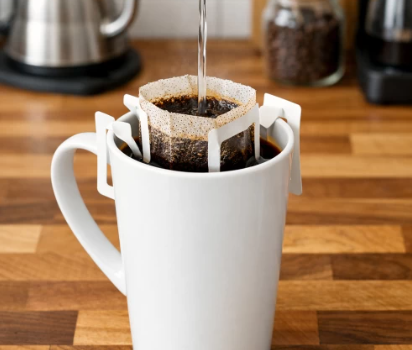
Also known as a hanging-ear coffee bag, this format places a measured portion of ground coffee inside a filter bag with paper ears. The consumer hangs the bag over a cup and pours in hot water to create a convenient pour-over-style brew.
Different Coffee Origins Should Not Use One Packaging Setting
The challenge in an Indonesian coffee project is not simply packing speed. Different coffee styles need to perform consistently within the same single-serve format. A dark-roast Sumatra coffee, a light-to-medium-roast single-origin coffee, and a fruit-forward specialty lot may all differ in powder flow, bulk density, degassing behavior, and brewing performance.
For this reason, drip coffee bag development should be based on real product parameters rather than a universal specification. During trials, brands should verify:
- Whether the roast date and degassing stage are suitable for packing;
- Whether the grind allows water to pass steadily through the filter;
- Whether the fill weight matches the intended cup volume;
- Whether the filter bag has sufficient space for coffee expansion during brewing;
- Whether dark and light roasts require different filling settings;
- Whether flavor performance remains acceptable after transport, display, and brewing.
A rich, full-bodied product may be designed for a smaller and stronger cup, while a floral or fruit-forward coffee can be paired with more detailed staged-pouring instructions. The packaging system should support the coffee style rather than limit it.
Grind Control Is the First Step Toward a Better Drip Bag
The grind for a drip coffee bag must avoid both extremes. Coffee that is too fine may restrict water flow, create clogging, lead to over-extraction, or leave excessive sediment. Coffee that is too coarse may drain too quickly and produce a thin cup. The goal is a coffee bed that allows water to penetrate evenly and extract within a reasonable brewing time.
Consistency of particle distribution also affects automated packing. An uneven grind can contribute to fill-weight variation and inconsistent brewing from pack to pack. Roasting, grinding, packaging, and cupping should therefore be treated as connected quality-control stages rather than separate operations.
How a Drip Coffee Bag Packing Machine Standardizes Production
A packaging solution for Indonesia ground coffee can combine dosing, filter-bag forming, hanging-ear application, and outer-envelope sealing in one workflow. Depending on configuration, a drip coffee bag packing machine can support:
- Automatic measuring and filling of ground coffee;
- Inner filter-bag forming and sealing;
- Automatic hanging-ear attachment for cup placement;
- Packing of the inner bag into an individual high-barrier outer envelope;
- Optional nitrogen flushing or gas replacement;
- Finished packs for cartons, gift boxes, e-commerce sets, or hotel amenities.
Stable automation helps control fill weight, reduce powder leakage, and maintain a consistent finished-pack appearance. For brands with multiple origins, seasonal releases, or roast-level SKUs, equipment flexibility and changeover efficiency should also be considered.
Outer-Envelope Sealing Is Part of Flavor Delivery
After coffee is ground, its aroma can gradually change through exposure to air. The individual outer envelope does more than carry brand artwork—it helps reduce the influence of oxygen, moisture, light, and surrounding odors.
High-barrier packaging materials, dependable heat sealing, and a suitable nitrogen-flushing approach can improve protection conditions during distribution. However, any freshness or shelf-life statement should be based on real coffee, actual packaging materials, sealing settings, logistics conditions, and storage testing. It should not be assumed solely from the type of machine or film used.
Creating Higher-Value Retail Packaging for Indonesian Coffee
Packaging can turn the Indonesian origin story into practical information consumers can use when choosing a coffee. In addition to the brand name and required ingredient information, consider including:
- Coffee origin or blend details;
- Roast level and expected flavor direction;
- Recommended water volume, brewing method, and brew time;
- Fill weight and suitable cup size;
- Batch, roast-date, or traceability information;
- Flavor descriptions that match the actual product.
For export projects, label language, net-content declarations, food-contact materials, and relevant regulations should be verified according to the destination market. Clear, truthful, and verifiable information is more valuable for long-term brand trust than exaggerated flavor claims.
From Sampling to Production: Selecting the Right Equipment
Before selecting a machine, brands should conduct trials with the actual coffee intended for sale—not only a general-purpose test powder. Testing should include powder flow stability, dosing accuracy, filter-bag seals, hanging-ear strength, outer-envelope integrity, pack appearance, transport durability, and real brewing flow rate.
Xiamen Sengong Packing Equipment Co.,Ltd provides packaging equipment solutions for coffee and food projects. For Indonesia ground coffee, hanging-ear coffee, and single-serve drip coffee products, visit Quicker Pack and VIPacker to explore relevant drip coffee bag packaging equipment and evaluate it against your production capacity, coffee formula, and packaging-material plan.